

Audio video installation services cover the on-site work required to turn a design and equipment list into a working system. Depending on the project, that can include site verification, mounting, cable pathways, equipment installation, termination, configuration, testing, commissioning, documentation, and user handoff.
Pricing varies because a single-display room and a multi-room commercial deployment involve very different labor, infrastructure, programming, access, and closeout requirements. A useful quote should explain the scope and assumptions instead of relying on one generic price per room.
This guide explains what professional AV installation usually includes, what drives cost, and how to compare potential installation partners.
What professional AV installation includes
A complete scope starts before equipment arrives. The installer should review the room, mounting conditions, power, network availability, cable routes, equipment locations, and any coordination required with the general contractor, electrician, IT team, or furniture vendor.
Common field tasks include:
- Receiving or inventorying owner-furnished equipment
- Installing displays, cameras, speakers, microphones, racks, and control devices
- Pulling and terminating the specified low-voltage cable
- Labeling cables and equipment
- Loading approved configuration or programming
- Testing signal paths, network connectivity, and room functions
- Supporting acceptance testing, training, and closeout
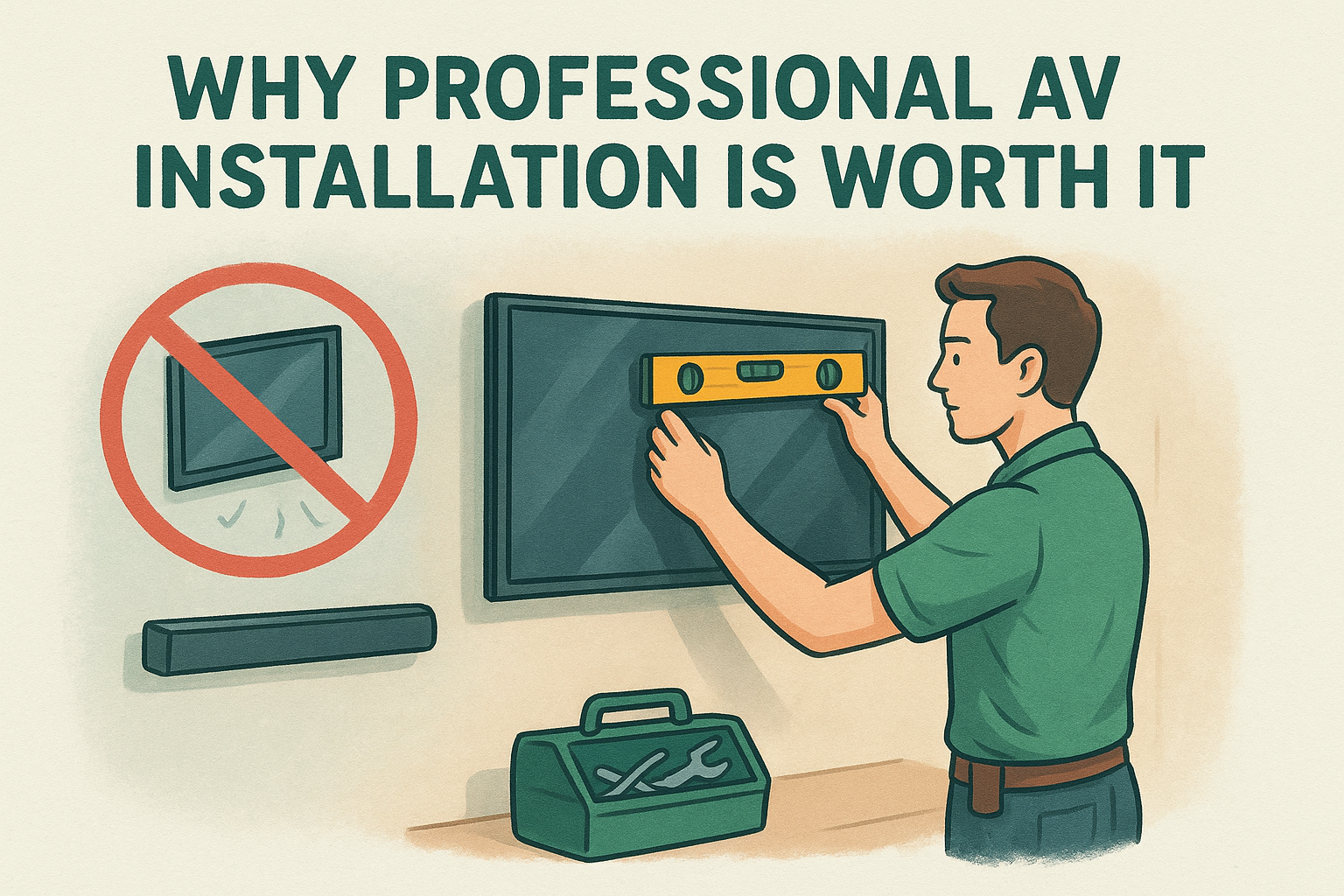
Installation quality affects supportability
Neat work is useful, but supportability matters more than appearance alone. Proper cable types, strain relief, ventilation, rack organization, labeling, test records, and configuration backups help the next technician understand the system. Requirements for in-wall and pathway cabling should follow the adopted electrical code, project documents, and product listings. The current NFPA 70 development page provides information about the National Electrical Code, but the locally adopted edition and authority having jurisdiction control each project.
Qualifications should match the assigned work
AVIXA CTS, CTS-I, and CTS-D credentials and manufacturer training can demonstrate relevant knowledge, but no credential alone guarantees performance. AVIXA describes CTS as a general technology credential, with CTS-I and CTS-D addressing installation and design specialties. Confirm that the assigned AV technician has experience with the specific equipment, task, site conditions, and safety requirements.
Manufacturer training may be particularly important for programming, DSP configuration, control systems, and warranty work. Review the actual role instead of asking every field technician to carry every credential. Our overview of CTS certification explains how the credentials differ.
Why AV installation quotes vary
The largest cost drivers are usually labor hours, crew size, travel, access, cable pathways, programming, testing, and project coordination. Equipment is often quoted separately. Ask whether the proposal includes permits, lifts, after-hours work, prevailing wage, disposal, travel, consumables, configuration, training, and return visits.
| Project factor | Why it changes the quote |
|---|---|
| Room and system complexity | More displays, microphones, speakers, sources, and control functions increase installation and testing time |
| Existing infrastructure | Usable power, network, pathways, and mounting surfaces reduce remedial work |
| Cable access | Finished walls, restricted ceilings, fire-rated assemblies, lifts, and long pathways add labor and coordination |
| Programming and commissioning | DSP tuning, control programming, device enrollment, and acceptance testing require specialized time |
| Site requirements | Badging, escorts, insurance, safety orientation, work windows, and prevailing wage can affect labor |
| Deployment scale | Multi-site standards can improve consistency but add logistics, reporting, and travel coordination |
Home and commercial projects are not directly comparable
A basic residential display mount is different from a commercial conference room, training space, or multi-room audio system. Consumer price examples often exclude design, equipment, network work, permits, difficult access, programming, project management, and documentation. Commercial buyers should request a written scope based on the actual site rather than using online consumer ranges as a budget promise.
Infrastructure and closeout can be worth the upfront effort
Planned structured cabling installation services can make expansion and troubleshooting easier, but only when the pathways, cable types, labels, and test requirements are documented. Ask for the closeout deliverables before award. Useful records can include rack elevations, cable schedules, IP information, equipment inventories, configuration backups, test results, and as-built documentation at commissioning.
How to choose an AV installation partner
Evaluate the company and the assigned people. A national brand, local contractor, staffing partner, and systems integrator may play different roles. Confirm who owns design decisions, provides supervision, supplies programming, manages changes, and supports warranty issues.
Questions to ask before award
- What work is included and specifically excluded?
- Who provides equipment, consumables, permits, lifts, and travel?
- What product and project experience does the assigned team have?
- Which credentials or manufacturer training are relevant to this scope?
- What testing, commissioning, and closeout documents are included?
- How are change orders, delays, and return visits handled?
- Who is responsible for post-installation support?
For multi-site work, a vetted technical staffing network for AV and IT teams can extend field coverage while the integrator maintains the design standard and acceptance process.
What to keep in mind before you hire
Audio video installation services should be compared on scope, qualifications, field process, testing, documentation, and commercial terms. The lowest line item may omit work the project still needs, while a higher quote may include programming, commissioning, travel, and closeout that another vendor left out.
Mega Services can connect project teams with vetted Mega Certified technicians across the United States and Canada. Availability depends on the location, scope, schedule, and required qualifications. Book a MegaTech for your AV installation to discuss the field requirements.
Mega Has The Staffing Solutions You Need For Your Next Pro AV Project.
Let MegaServices help you grow your business by providing you with the qualified personnel you need when you need them.
John Pierce III is the Director of IT at Mega Services, connecting the company’s people, processes, and technology. Drawing on experience in field installation, technician support, recruiting, and dispatching, he develops systems, automations, and reports that make work simpler and more efficient. John specializes in identifying inefficiencies and transforming complex processes into practical, user-friendly solutions.
